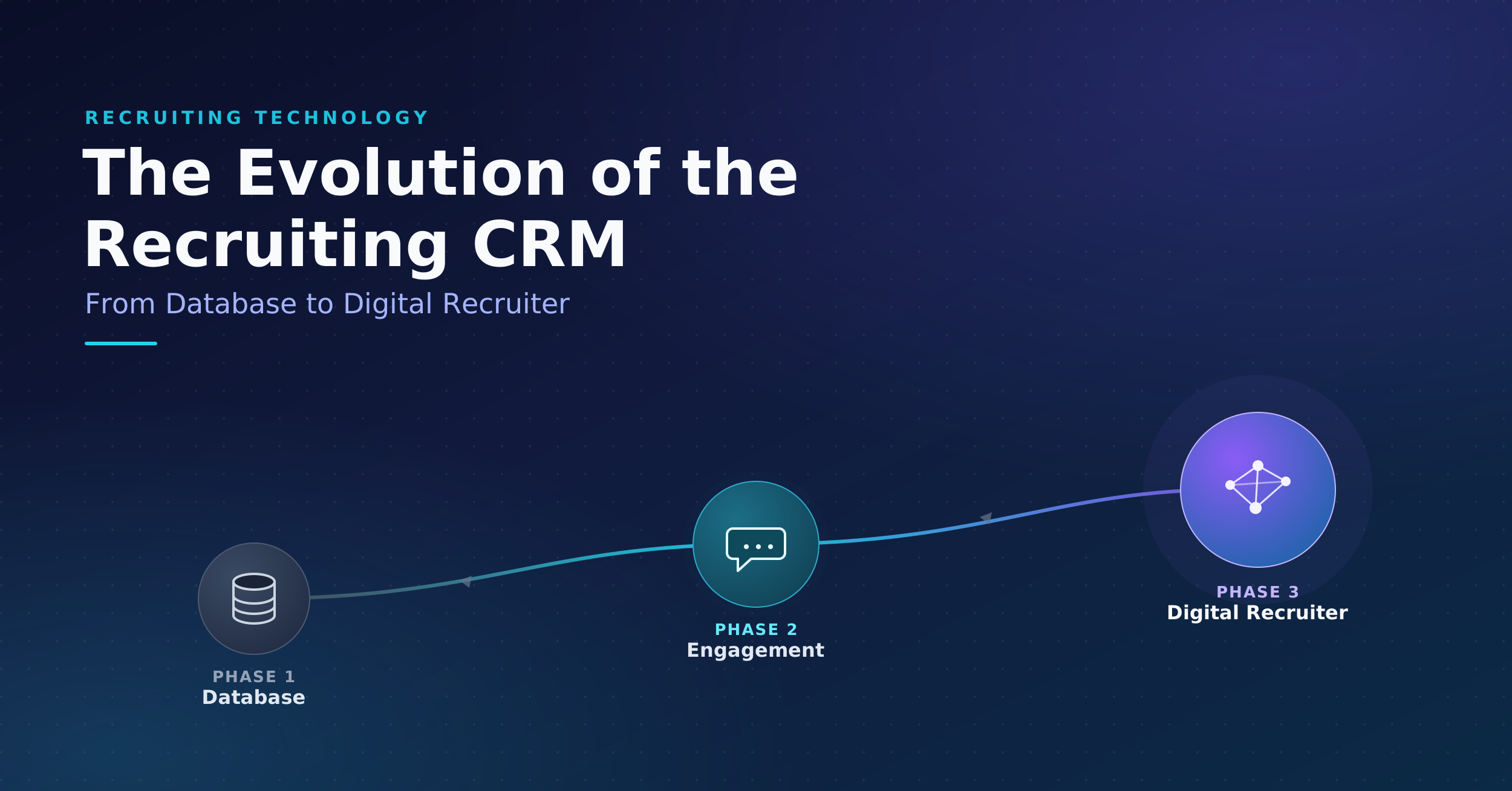
For years, recruiting CRMs were little more than glorified databases. They stored candidate records, tracked outreach, and supported basic segmentation. Useful, yes—but fundamentally passive.
That era is over.
Today’s recruiting CRM is evolving into something far more powerful: a digital recruiter that actively engages candidates, prioritizes pipelines, and drives outcomes alongside human recruiters.
This evolution isn’t cosmetic. It’s structural—and it’s reshaping how recruiting organizations operate.
The earliest recruiting CRMs focused on storage. Their primary value was centralization:
Engagement was manual. Intelligence was limited. Recruiters were responsible for deciding who to contact, when to follow up, and how to manage pipelines.
The CRM remembered. Humans did the thinking.
As candidate expectations rose, CRMs added communication features:
This helped recruiters reach more candidates, but it didn’t fundamentally change how recruiting worked. Automation followed rules, not insight. Recruiters still made every prioritization decision manually.
Volume increased. Efficiency improved. Complexity remained.
The next evolution is transformational.
Modern CRMs—especially those powered by AI—don’t just enable engagement. They participate in recruiting.
They:
This is the shift from system-of-record to system-of-action.
The rise of the digital recruiter doesn’t eliminate human recruiters—it elevates them.
Recruiters spend less time managing logistics and more time:
The CRM handles scale. Humans handle nuance.
Recruiting complexity has outpaced human capacity. Candidate volumes are higher. Channels are more fragmented. Speed expectations are relentless.
Without intelligence embedded into the CRM, recruiting teams can’t scale sustainably.
The future of recruiting isn’t recruiter or technology. It’s recruiter plus digital recruiter.